Vancouver Queer Film Festival Review: The Coast Is Queer

Wow, that was an awesome crop of movies this year! Fifteen short films were showcased, ranging in quality from “pretty good” to “excellent”. I’ll just mention the ones that made a strong impression on me.

Wow, that was an awesome crop of movies this year! Fifteen short films were showcased, ranging in quality from “pretty good” to “excellent”. I’ll just mention the ones that made a strong impression on me.

Butch Tits

Butch dykes. Showing off their tits. Talking about their tits. Playing with their tits. Yeah, there were a lot of tits. Am I ever going to stop saying “tits”?

The Original Movie

I’ll be honest here, I have no clue what the fuck that was about. Did I love it? Oh yeah. The visuals (silhouette animation, which I’ve never seen before at the VQFF) and the music were amazing, the plot was… you know what? I don’t care. I could have watched this all night.

The Heist

A gang of beautiful cat burglars plans to steal a special shoe from the Vancouver Museum’s Fluevog exhibition. Gorgeously filmed in black-and-white, the better to show off every ribbon and sparkle, with fantastic choreography and catchy music, this might be one of the best films of the night.

Stay

The theme here is love vs. fear. Should you come out to your parents and spend the night (the whole night) with your boyfriend, or stay in the closet and risk losing him? Love wins in the end. A little by-the-numbers, but well acted and executed.

Online

Dayton juxtaposes pictures of surfing the net and jerking off, with a voiceover narrating his most heartfelt confessions and darkest fears. Gripping, raw, powerful.

Sleep Tight

Well, shit, I had no idea bedbugs were such horrible beasts. lisa g and her girlfriend found out the hard way in 2006 when their apartment was infested. They filmed the entire ordeal—washing clothes and sheets, moving furniture, bagging up everything, fumigation—only editing and releasing the movie last year.

Super Queer

Okay, that was just too cute for words. A superhero who changes into his secret identity by twirling around like Wonder Woman (but with more sparkles) and who turns gaybashers into prancing queens with lavender lightning? Be honest, who hasn’t fantasized about someone like that?

Ms. Thing

Hey, Karen X Tulchinsky’s a director! This fake infomercial hawks a female version of Thing (you know, from The Addams Family) for all the lonely gals tired of the club scene who need a helping hand. Terrifically acted, cutely raunchy, and so very funny.

Horsey

Until last night, I could honestly say I’ve never seen a woman suck on a rubber dick worn by another woman, in a tux, wearing a horse’s head. After last night, I can no longer make that claim. Bren Ryder and Amber Dawn star in this offbeat little flick about fantasy and desire. Come for the confessions, stay for the horsey sex.

Vancouver Queer Film Festival Review: Riffs On The Theme Of Activism

For various reasons I missed The Love That Won’t Shut Up, Rex vs Singh, and The Portside. I’d be damned if I was going to miss the last of the screenings commissioned by the Queer History Project.

Riffs consists of five very short films (about 5 minutes long on average), with the focus being on a panel discussion with the directors. Moving and informative, Riffs is an excellent conclusion to an already fantastic series.

For various reasons I missed The Love That Won’t Shut Up, Rex vs Singh, and The Portside. I’d be damned if I was going to miss this screening, the last of the series commissioned by the Queer History Project.

Riffs consists of five very short films (about 5 minutes long on average), with the focus being on a panel discussion with the directors. Moving and informative, Riffs is an excellent conclusion to an already fantastic series.

Butte

Shot in 2006 by, and starring, Byron Chief Moon, it shows him dancing and meditating on Blood Reserve land in southern Alberta. The visuals are stunning (seriously, that is one beautiful landscape), and Chief Moon does a wonderful job of wordlessly communicating his deep connection to the land, but I couldn’t quite see what it had to do with history or activism. But as he explained during the Q&A, this was a way for him, an urban queer, to reconnect to the land of his ancestors.

Laughing Behind Enemy Lines

This funny and touching documentary by David C Jones gives us a glimpse of the drag entertainers of the 50’s and 60’s, back when homosexuality was still illegal. They didn’t have parades then, or a bookstore, but through their acts, and bringing like-minded people together, these drag queens helped plant the seeds of a true community. Was it activism? Hell yes, though they may not have thought so at the time.

And I learned something, too: one of the interviewees (who owned a nightclub called Roddy’s) briefly ran a queer bootleg club in 1955! Bootleg? Well, BC was one of several provinces that briefly flirted with Prohibition, but that ended in 1920. However, sale of liquor could only take place in government-controlled stores. It’s possible those stores wouldn’t sell to gay people or businesses back then. Fascinating either way!

In The Garden

This is another short that’s at first sight not obviously related to history or activism. Or queerness, for that matter. Debora O uses old footage obtained from her father of their personal garden, and in her voiceover praises the art of community and urban gardening: it affords us a powerful connection with the earth (so often missing with urban folks), with our bodies, with the world at large, and draws the vital link between consumption and cultivation. She concludes that queers, especially, need to reach out and connect just like urban gardeners.

Which might seem a little tacked on, but there is a connection. Queers, she said in the post-show Q&A, are doing a lot of work in community gardening. In fact, her her community garden was started by a queer woman. And, the movie is partly about her family history: she loves loves piecing together stories, stories that were lost when her family immigrated. It’s not always accurate, but it’s a start.

A Film For W.G.

Gwen Haworth delivers this short homage to Vancouver’s trans activists of the 90’s. It was then that trans people (mostly trans women at first, but then branching out to include trans men) started to come together and work for their rights. Featured is Jamie Lee Hamilton, still going strong today, and came very close to getting on the Vancouver City Council in 1996. There’s also the Zenith Foundation, maybe one of the earliest trans groups, who was distributing a newsletter in the early 90’s. An interesting look at a very young, but already very diverse, movement.

I See The Fear

Well, that was a punch in the gut, wasn’t it? This collage of photos and videos by Joe Average and Jamie Griffiths, displaying Joe’s progressing lipoatrophy starting in 2003. It’s raw and unforgiving, daring us to look away—the already troubling images then enhanced by other visual effects, giving them even more of a skeletal or demonic look. The main purpose of the movie, for his, was to make art as therapy and healing. But also to counter the media talking about AIDS as a manageable disease, thanks to new drugs. Younger generations believe there are no consequences to unsafe sex, but drugs still have serious side effects. With this movie and others like it, we can learn from history and hopefully avoid making the same mistakes twice.

Vancouver Queer Film Festival Review: The Butch Factor

Hm. Okay. This documentary is going to be a tough one to review. From what I’m hearing it was extremely polarising, with people saying they hated it, it made them angry, they almost walked out. I didn’t almost walk out, and it didn’t make me angry; I agreed with the basic thesis, but had definite problems with some of the actual interviews and scenes.

Hm. Okay. This documentary is going to be a tough one to review. From what I’m hearing it was extremely polarising, with people saying they hated it, it made them angry, they almost walked out. I didn’t almost walk out, and it didn’t make me angry; I agreed with the basic thesis, but had definite problems with some of the actual interviews and scenes.

In short, The Butch Factor asks the question: what is masculinity? How do you live it? How do you define it? Through a series of interviews with butch gay men, a couple of more effeminate men, and one FTM transsexual, all relating their experiences, as well some academics discussing the theory and wider issues, it reaches the conclusion that what’s called “masculinity” has changed over the years, is expressed very differently in different cultures, so when you get right down to it—especially in the gay community—masculinity is whatever you define it to be.

This stance is to me a major cop-out. It ignores the politics of gender and sex

None of this was really new to me; I’d already picked up a lot of the theory from reading various articles and books on queer history and gender theory. But what I found problematic was some of the statements—and unspoken assumptions—from the butch interviewees. One pattern I noticed was a desire to distance themselves from a gay identity. For example, one started talking about his “sexual orientation,” then caught himself and corrected it to “sexual preference.” Another (possibly the same, I’m not sure) brought up how his sexuality was only a small part of his life, only one of many labels he wore, so he didn’t see why he should emphasise it.

Which… yes, is technically true, as far as it goes. The thing is, this stance is to me a major cop-out. It ignores the politics of gender and sex, and ignores the reality that all of these labels—gay, straight, bi, queer, etc—are already loaded with cultural baggage; I have a hard time seeing how you can easily separate your sex life from your life in general. It sounds more like something out of the Log Cabin Republican songbook than anything else.

The other worrying viewpoint shared by many of these men is a seemingly clear idea of what “masculinity” really is. One said that it was about integrity; another, about protection (ie: protecting your partner or other people); another, about discipline. But all of these fine virtues are either linked to masculinity in some specific cultures (like mainstream white North American) or could be applied to all people everywhere, men or women! Do women not get to have integrity? Are women not allowed to be protective?

The impression I’m getting from these interviews is that these “masculine” men have internalised quite a lot of mainstream (heterosexual) culture’s criteria of masculinity: namely, that masculinity is an ideal that must be striven for, and that it means discipline, control, competition, and something to prove—maybe competition with other men, certainly competition with yourself.

And above all, “masculinity” means “non-femininity.” Several times the interviewees told about being uncomfortable in mainstream gay culture, with its obsession with pop culture, fashion and shallow beauty, and preferring manly pursuits like rugby and drinking with the lads. Hey, fair enough: I don’t like the club scene much, am mostly indifferent to Lady Gaga, might be described as “fashion-impaired,” and absolutely love playing volleyball with the VGVA. I think it’s great that there are spaces in the gay community for sports and related activities. But that doesn’t mean I’ll agree with guys like Jack Malebranche, author of Androphilia: Rejecting the Gay Identity, Reclaiming Masculinity. He was interviewed in the movie, and his position is… well, the title pretty much says it all. The gay community has placed too much emphasis on the feminine, and that needs to change. Just how we should change, and what our alternatives are, he didn’t make clear in the interview, and I’m not buying the book just to find out.

I see The Butch Factor as an homage to the wide variety of gay men who define and redefine masculinity every day.

But in spite of the title, the movie does give a voice to non-butch men; those who could never pass for straight, who were taunted and abused in school, and who came out the other side with a perspective and empathy that their manlier brothers seem to lack. And a certain toughness, too. The masculine men mentioned a few times that masculinity does not equal toughness, and that a drag queen can be just as tough as the most straight-acting bodybuilder.

I see The Butch Factor as an homage not to masculinity, but to the wide variety of gay men who define and redefine masculinity every day, though it took a pretty odd path to get there. And maybe as a critique of the gay community as a whole: as disjointed as the documentary was, with academic gays vs. blue-collar gays, butch vs. nellie, you might see it as a reflection of our community itself. It’s true that we split ourselves off in sub-communities (though I question whether we have it worse now than a generation ago); it’s true that there are gay men who are uncomfortable with drag queens or any amount of gender bending; it’s probably true that the current mainstream porn look (big muscles, hairless bodies, more youthful appearance) is a reaction to the AIDS epidemic.

What’s the bottom line? Maybe there isn’t one, apart from the aforementioned “don’t worry too much about labels, just live your life as best you can.” If so, you could question whether the whole documentary was really useful, if all these interviews and talking heads were just leading up to this. I think it was, if only to highlight just how many strong opinions there are out there. That alone makes it a worthy entry in the Queer Film Fest.

Vancouver Queer Film Festival Review: Mr. Right

I expected a light, fluffy comedy like The People I’ve Slept With, but this movie turned out to have quite a bit of drama and character development.

I expected a light, fluffy comedy like The People I’ve Slept With, but this movie turned out to have quite a bit of drama and character development.

The (mostly) parallel storylines revolve around the trials and tribulations of a network of gay friends in London, along with their fag hag friend. Alex is growing up and taking charge of his life away from his ex, William has to juggle raising a daughter and trying to have a love life, Lars is probably cheating on Tom, Louise is worried her new boyfriend will end up being gay (like all the other ones, apparently). All interesting stories with characters that play with, but ultimately transcend, gay stereotypes.

The only slightly annoying aspect is Louise’s storyline and her bad luck finding non-gay boyfriends, which seemed tacked on, and incidentally the only one that was played purely for laughs. The opening scene seemed to imply she would be the central character, but we ended up seeing comparatively very little of her, and her presence didn’t add anything to the other storylines. That’s not a big complaint, mind you: I enjoyed the movie very much, and it’s only in hindsight that I’m asking, why was Louise even there?

Vancouver Queer Film Festival Review: The People I’ve Slept With

Oh my fucking gawd, that was amazing. I was a little hesitant to like it, since just before the screening I learned that director Quentin Lee also directed the short Little Love, which I wasn’t that crazy about. But good news, it looks like his forte is light comedy!

Oh my fucking gawd, that was amazing. I was a little hesitant to like it, since just before the screening I learned that director Quentin Lee also directed the short Little Love, which I wasn’t that crazy about. But good news, it looks like his forte is light comedy! 2% serious and 98% pants-wettingly hilarious, it hits every cliché in the gay-com and rom-com books with shameless abandon and makes it work. And I won’t even mention the over-the-top silly scenes, like Angela collecting her DNA samples.

Props to the actors (except the guy playing Lawrence, who was cute but bland) for their great work and especially the physical comedy. And though the comedy was heavy on clichés, it never descended into shallow stereotypes: all the main characters are nicely fleshed-out; we’re (mostly) laughing with them, not at them. A great job all around!

Vancouver Queer Film Festival Review: Pornography: A Thriller

Well, that was a mindfuck and a half! Hot porn stars, a mythical snuff tape and urban legends collide in this creepy nightmarish thriller. From the synopsis I expected weird horror, and at first that’s what it looked like I was getting. The first act, dealing with the life and disappearance of porn star Mark Anton, was really disturbing but had no overtly supernatural elements.

Well, that was a mindfuck and a half! Hot porn stars, a mythical snuff tape and urban legends collide in this creepy nightmarish thriller directed by David Kittredge. From the synopsis I expected weird horror, and at first that’s what it looked like I was getting. The first act, dealing with the life and disappearance of porn star Mark Anton, was really disturbing but had no overtly supernatural elements. The second act, following Mike’s research into porn stars of yesteryear, ramps up the horror with possession, mysterious photographs, disappearances, desperate phone calls, and our first glimpse at Anton’s snuff film.

The third act takes it up to 11 and twists off the knob, as past and present and reality and fiction collide, porn-star-turned-director Matt plans to recreate Mark Anton’s most famous video (though it came to him in a dream), but keeps getting glimpses of the past and various shadowy presents.

I expected Porn: A Thriller to be closer to The Ring, with the mysterious deaths, curses and deep dark secrets. But in fact it’s closer to House of Leaves in that it plays fast and loose with the fourth wall, and multiple layers of stories. That’s just fine by me, though not everybody thought so. From what I understand, this was an extremely polarising movie, with half the audience either confused or bored, and the other half enjoying the feel of their minds getting a good fucking. Me, I was in the second camp. I’ve read House of Leaves and love it, so I was ready to just sit back and go with the flow. I give this movie two (scared, shaky) thumbs up.

Vancouver Queer Film Festival Review: Strong and Silent Types

My first show of the festival was a collection of five short films about—as the name implies—men and masculinity. A little uneven, it was still a very good kickoff to my VQFF experience.

My first show of the festival was a collection of five short films about—as the name implies—men and masculinity. A little uneven, it was still a very good kickoff to my VQFF experience.

Last Call

A neat little fantasy of a broken man who, upon dying, must make peace with his messed up life before he can move on. The symbolism is clear: Gavin’s purgatory is a bar, perfectly fitting since alcoholism had been his actual purgatory for the last 2 years of his life. And his paradise? his first meeting with Mark. He’ll get to live a perfect moment forever, or possibly (this just occurred to me) get the chance to take his life in another direction. The ending’s deliberately ambiguous, and that’s okay.

Little Love

That was a miss, I feel. The love triangle story was predictable, the characters forgettable, the voiceovers annoying with their exposition of plot and inner feelings. Show, don’t tell!

Disarm

Take one butch, musclebound jock, comfortable in his gayness but lonely and withdrawn; add one somewhat-less-butch hustler, obsessively straight-acting and sneering at femmy guys; put them together, and you get a blisteringly intense conversation about masculinity, gay-bashing, identity, goals, repressed pain and being true to yourself. Overall I liked this film very much, the acting was quite good and the subject matter dense and engaging, though the writing felt forced at times, jumping from topic as though it had a long checklist to cover, and temporarily snapping me out of the story. Shame; with a little more editing, I think this could have been a real winner.

Promise

That was pretty fucking disturbing, and I’m still not sure how I feel about it. On the even of their wedding, the long-simmering tension between the two protagonists comes to a head in abuse and rape. Neither of the men comes off looking good: Stuart cheated on Chris, is a shameless attention whore and deliberately pushes his buttons, but Chris is also revealed to be a controlling dick and, well, ends up doing the raping. I don’t think we’re supposed to take sides—they’re both terribly flawed, and have to decide on their own where to go from here.

Professor Godoy

Math nerdery and intergenerational attraction between teacher and student combine in this nice, slow-paced Brazilian film. Unfortunately, for me it doesn’t go beyond “nice”. The characters were cyphers, and the story feels very by-the-numbers. I wanted to like it, especially since the director was in the audience, but… no, it just didn’t do it for me.

Learning jQuery: toggleClass( )

I’m still a novice at jQuery, and recently had a chance to learn a little bit more, for a project I’m working on.

I’m still a novice at jQuery, and recently had a chance to learn a little bit more, for a project I’m working on.

Here’s the HTML (classes and ids simplified a bit):


And here’s the desired behavior: when the link is clicked, the parent div (ie: #base) should switch its class between “black” and “white”. What actually happens to the styles, we won’t get into here. My first attempt went like this:

$(document).ready(function(){
    $(".black a#toggle").click(function() {
      $("#base").removeClass("black");
      $("#base").addClass("white");
    });
    $(".white a#toggle").click(function() {
      $("div#base").removeClass("white");
      $("div#base").addClass("black");
    });
  });

But that wasn’t working. One click did toggle #base from “black” to white”, but a second click wouldn’t toggle it back to “black”. It looked like since the page was loaded with “black” as the div’s actual class, the click function was only bound to “.black a#toggle”. After a bit of experimentation and research, I found the answer: toggleClass(). So my code read like this:

$(document).ready(function(){
  $("a#toggle").click(function() {
     $("div#base").toggleClass("black");
     $("div#base").toggleClass("white");
  });
});

And that worked. Ah, but there’s a better way! toggleClass() (just like addClass() and removeClass(), as it turns out) can take a space-separated list of classes as its argument; each one of these classes will be toggled in the selected element(s). So, to switch between “light” and “dark” I just need a single line:

$(document).ready(function(){
  $("a#toggle").click(function() {
     $("div#base").toggleClass("black white");
  });
});

Easy-peasy! toggleClass() can do more than what I’ve show here, though! Read the official documentation for the full story.

Ghosts of Old Victoria

As I said in my previous post, during my recent trip to Victoria I went on a ghost walking tour. It was fairly entertaining (our guide was quite a good storyteller), and I learned quite a bit about the history of Victoria, though of course it didn’t convince me that ghosts are real.

As I said in my previous post, during my recent trip to Victoria I went on a ghost walking tour. It was fairly entertaining (our guide was quite a good storyteller), and I learned quite a bit about the history of Victoria, though of course it didn’t convince me that ghosts are real.

Starting Out

We started out near the harbour. Our guide—an older gentleman with a nice hat and a cane topped by a silver skull–got the ball rolling by asking, “What are ghosts?” He went on for a bit about how ghosts are energy, and the law of conservation of energy says they never go away, so we’re surrounded by ghostly energy all the time. Sometimes we see ghosts, sometimes we hear them, or feel a cold breeze, or something. And anytime you don’t know exactly where some random sensation comes from, you should ditch logic and consider the supernatural. Seriously, this was a textbook Argument from Ignorance.

Sigh. I guess I expected the bullshit pseudoscience and broken logic, but this wasn’t really getting me in the mood. I wanted gory tales of death and dismemberment and ghostly torment, dammit! Everybody else seemed to be eating it up, though, especially once he gave us instructions on sensing ghostly energy with the palm of our hands. The trick is to rub the thumb on the opposite palm quickly (do this with both hands), then sort of feel around, or slowly put both hands together, and if you feel a tingling or prickling it’s totally that you’re sensing your own energy. No other possible explanation!

Top

The Empress Hotel

Anyway, on to the ghost stories! Our first stop was on the harbour, in front of the Empress Hotel. The Empress, dontcha know, is one seriously haunted hotel.
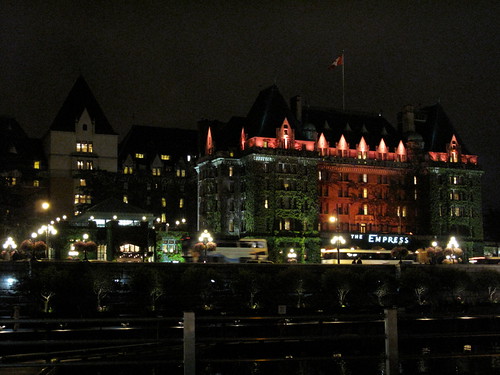
The Empress Hotel

Apparently almost every room and corridor has a story attached to it, but our guide focused on two. First, the eighth (and topmost) floor of the West tower is haunted. Apparently, in the 60’s when that whole wing was under construction, a workman was up in the unfinished 8th floor and saw weird moving shadows, of a body swinging back and forth, but there was nobody there! The man was scared out of his gourd, and immediately quit. Further investigation revealed that a worker had hanged himself there about a year (I think) previously, but management had hushed up the whole thing so as not to scare away employees or guests.

Our guide claims to have worked at the Empress during the 60’s, but got the story second-hand through another employee; he never spoke to the worker who saw (or claimed to see) the apparition. Maybe there never was such a worker. Maybe the whole story is just urban legend. Who knows? This happened 45 years ago, and the top floor (supposedly) remained vacant or unfinished since then. 10 years ago they converted the floor to luxury suites. I don’t remember if those suites are said to be particularly haunted. But they probably are.
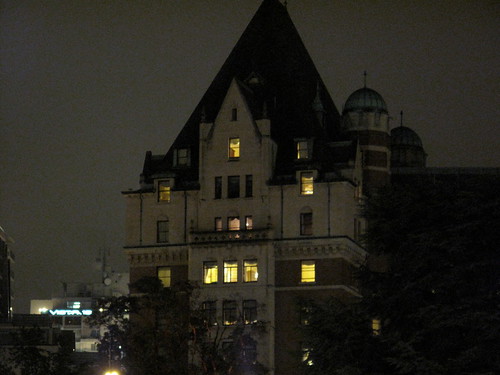
The Empress Hotel's West Tower

He also told us about a ghostly old woman who haunts the 6th floor of the same wing. You’ll hear a knock at the door, and open to an old lady in pajamas, who seems lost and confused. You try to help her find her room, and she leads you to the elevator. Then about that point, she vanishes. The story goes that she was a winter guest at the hotel many years ago, who simply died of natural causes. Her spirit stayed in the room, but got brutally evicted when that room was torn out to make room for the elevators. Now she wanders around lost, unable to rest because ghosts don’t like change.

Top

Burial Boxes and Floating Heads

Moving a little bit up the harbour, the guide pointed out the Inn at Laurel Point, clearly visible across the bay at night with its green neon “L” sign. This is the setting of the next story. The Songhees people (the Nation whose traditional territory includes the Victoria area) have a custom of burying important people in boxes either placed high up in trees, or buried in the ground. One such burial site was at Laurel Point, but was torn up by an evil enterpreneur who built his house and shop on the desecrated site. Soon after, the shop went up in flames. The owner’s wife is said to have seen something emerge from the flames, but it’s not clear what. She got sick and died a few weeks later; the coroner’s verdict was that she “died of fright”.

The land was sold to William Pendray (one of the biggest industrialists in Victoria then) and a factory was built on the site. But a string of weird accidents and occurrences kept happening; Pendray’s son died when his horse spooked and threw him off and somehow his head was cut off by a cart wheel. Four years later, Pendray himself died while inspecting his factory when a pipe fell on his head. Pendray’s house is now part of Gatsby Mansion, an upscale little hotel right by Laurel Point. The spirits don’t try to kill people anymore, but it’s supposedly still haunted. If you stay in room #5, you will see two ghostly heads emerge from the walls and sort of circle each other. They may try to talk, but their words are impossible to make out. These heads are Pendray and son, haunting the places of their untimely deaths.

PS: the deaths of the Pendrays are documented fact, though I suspect details in the guide’s story are exaggerated. For example, all the sources on the Net mention only that Pendray Jr. was thrown from his horse.

PPS: there’s a simple way to disprove the haunting story. The guide said that anybody, even skeptics, will see these heads if they stay the night in room #5.

Top

Haunted Kitchen

Next stop: Nautical Nellie’s. The kitchen is said to be haunted, with various poltergeist-y activities: rattling cookware, occasionally thrown objects, that sort of thing. What’s odd is that there are no records of murders or violent deaths in that spot, which is usually an indicator of restless spirits.

The real (for certain values of “real”) story is this: back in the 1850’s, the spot was part of Fort Victoria, with the palisades, fur storehouses… and cannons. In 1846 those cannons were used to shoot at a chief’s house across the bay, whose subjects were hostile and needed to be intimidated; thankfully, nobody was home and nobody died. In 1853, Governor Douglas was coming into the harbour; as he rounded Laurel Point, the fort fired its cannons to greet him. Some guy (I forget his function, either a junior officer or civilian) was leaning too close to the cannon and didn’t hear the warning, and got his hand shot off. The story goes that Douglas saw this hand fly overhead, and the crew of his ship unsuccessfully tried to retrieve it.

It is apparently this hand that’s haunting Nautical Nellie’s kitchen.

Top

Waiting for the Flood

Right next door to Nautical Nellie’s is Red Fish Blue Fish, another fine seafood restaurant. It is also the former old Customs House, built in 1875 and still standing to this day. At the time, the customs house was generally hated by Victoria’s population because it was a symbol of broken promises. When BC joined Confederation in 1871 Victoria was promised a railway, but the terminus ended up in Vancouver instead. I’m not really clear how politicians expected the train to cross the water, but hey. Worse, the customs house took a cut from all the commerce coming into Victoria—and there was a lot—and sent it out to faraway Ottawa.

That’s not the ghost story, that was just a bit of history to put us in the mood. And honestly, as a tourist I do appreciate all these little tidbits of Victoria history. But here’s the ghost story:

Emily Carr (yes, that Emily Carr) was born in 1871, the same year BC became part of Canada, not far from where the customs house would be built. As a young child (it’s said) she hung out on the docks in this very spot by the customs house, listening to tall tales from an… uncle? family friend? I don’t remember and my notes aren’t clear. Anyway, there was one particular story she loved, of a great wave coming in from the sea and washing over the buildings. She’d spend hours at the window (of the customs house, apparently) watching out for this fantasy tidal wave. It’s said she’s there to this day. The guide pointed out one window on the ground floor of the customs house, where a ghostly image of the child Emily may sometimes be seen.

Carr died on March 2nd 1945, at the James Bay Inn, which at the time was operated as a hospital. It is said she still haunts room 115, where she died. I don’t remember what the guide said about apparitions in that rooms, but they’re probably not frightening. Incidentally, this means that Carr is haunting two places at the same time. This makes sense if you think of ghosts as echoes, projections, as opposed to disembodied consciousnesses, but the guide never brought that up—maybe hoping the group wouldn’t pick up on the apparent contradiction. I guess ghosts can be whatever you want them to be, and the more stories the better.

Top

The Steamship Valencia

We walked over to the north end of the wharf, and the guide related the sorry tale of the SS Valencia.

On January 22nd, 1906, the Valencia was coming in from San Francisco when she got lost in the fog, hit a reef near Pachena Point and ran aground. Though they were in sight of land, the waves and cold meant that few of the crew made it to shore to signal for help. Rescue ships could not approach the wreck but managed to pick up some survivors in lifeboats. On January 24th a large wave washed the wreck off the rocks, killing all remaining passengers on board. In all, out of the approximately 150 passengers and crew, only 37 men survived (and no women or children).

Since then, there have been a number of rumours and ghosts sightings of the Valencia or her dead crew. Sometimes the ship itself is seen reenacting its destruction; one time, a lifeboat is claimed to be found with skeletons on board but always disappears before an investigation can be mounted. According to the guide the Valencia “wants to be remembered”.

PS: interesting factoid, it seems the Valencia is the only ghost ship in the area.

Top

Cradles and Ley Lines

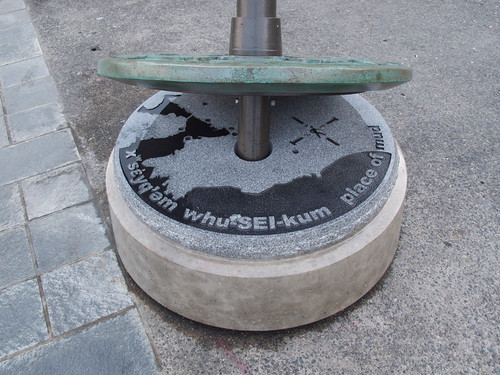
The supernatural isn’t all about suicides and tragic deaths. Some of it is positive. Songhees Point (opposite Laurel Point, and together with it forming the entrance to Victoria’s inner harbour) was known to the local people as “Place of the Cradle” or “Cradle-board.” This name came from the tradition of leaving infants’ cradles in that place as soon as they were old enough to walk, to give them luck and long life.

Then the guide went off on a tangent about Stonehenge; why is it there, out in the middle of nowhere? Turns out it aligns perfectly with other special landmarks, all the better to carry energy or something. Oh crap, I thought, he’s talking about ley lines.

Yes indeed. Did you know there’s a ley line in Victoria? It’s several city blocks wide (really) and about 5km long, stretching from Place-of-the-Cradle through Bastion Square, St. Andrew’s Cathedral, and ending at the 7th fairway of the Victoria Golf Course. No, really. Naturally, that fairway is haunted—by a woman who was murdered there, though my notes don’t have any juicy details.

I know what you’re thinking: do these places actually line up? Well, sure… as long as you accept that the ley line is “several blocks wide”. Songhees Point is almost exactly due west of Bastion Square. That might or might not be a problem, since the Square isn’t exactly aligned east-west, pointing more towards the Delta Victoria Inn. Likewise, St. Andrew’s is pretty much due east of Bastion Square, so those line up okay. But the golf course, and especially the 7th fairway (which I believe is at the southern end of the course, hugging the coastline), is way off. You’d really need to stretch to align that with the other 3 landmarks. The Oak Bay Marina is a much better fit, but I guess there aren’t any murder stories associated with it.

And really, in a city with such a rich history that kind of mystical math isn’t hard to do. Take a halfway regular street grid, a good mix of Native and colonial landmarks, give yourself enough leeway, and you’re good to go.

At this point we got away from the harbour and crossed into Bastion Square. The guide pointed out the Commerce Canoe, a recently-commissioned piece of art. It definitely looked like a reference to the old Songhees custom of burying their dead in canoes up in trees, but the guide hinted that there was more than that. The canoe, he said, pointed towards Laurel Point.

Part of another ley line? Did he get it confused with Songhees Point? Because the Commerce Canoe most definitely does not point towards Laurel Point, that’s too far south. As I remember it, and as my photo suggests, it’s pretty well aligned with the street, which means it points a bit north of due west.
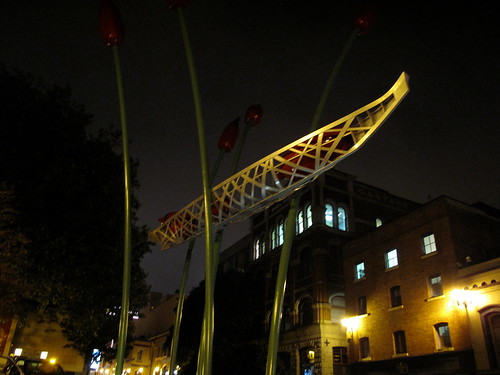
Commerce Canoe

Top

The Hanging Judge

The website advertised “narrow streets and back alleys of Old Town”, but up to that point, there hadn’t been any back alleys. Now that was about to change! Our guide first pointed out the BC Maritime Museum, which is—you guessed it—haunted. Many people have reported feeling pressure (not just slight, but a strong shove), seeing a strange “burly man”… sorry, my notes aren’t too clear on this. Bottom line: haunted. He took us on a side alley, turning only a couple times but that was enough to completely lose me. We ended up in a little courtyard behind the museum (I think), and there we went inside.

It was a little side room, with a dozen or so chairs, and some weird decor I’ll get to in a moment. We sat down and he regaled us with some old tales of the museum from when it was a courthouse and gallows. There was a particularly nasty judge, lots of hangings, and since we’re talking criminals here, a lot of them didn’t have anyone to claim their body, so they were buried on the premises.

The room we were in was either designed to play up the “ghost” theme, or else it was co-rented by a coven of cheap gothy Wiccans. The only illumination came from a couple windows and a couple lamps with very dark lampshades. In one corner was a sort of Hallowe’en graveyard display, with cardboard tombstones and a sad plastic skeleton with a missing leg.

One girl sitting by herself at the very back seemed… kind of spaced out. She looked either still cold or really nervous about the whole ghost thing, and I kept waiting for her to scream that she saw a ghost. Honestly, I couldn’t help wondering if she was a plant, there to ramp up the spooked-out atmosphere and thus make everybody else more likely to “see” something.

Nobody did, unfortunately, even those that went into the very dark corner that was lousy with ghost energy—or so the guide said. You’d be likely to feel physical pressure or strong tingling on the palms of your hands that you just rubbed with your thumbs. Unfortunately, that was kind of a bust too.

We went back out into the (comparatively better-lit) night for the last leg of our trip.
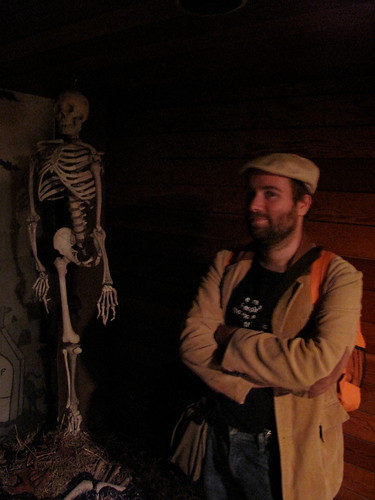
Lars and the Skeleton

Top

Helmcken Alley

The big attraction here was the haunted well. It seems that in the spring of 1858, during the Gold Rush, a group of miners were camping out in what’s now Helmcken Alley, just outside the site of Fort Victoria. One of them lost a ladle (according to my notes) down the well, and bribed a boy to retrieve it, but the boy fell and died. The well remained, but was eventually covered by subsequent buildings until 1975, when it was rediscovered, then nicely bricked up and made the focal point of the lobby. This apparently ticked off the boy’s spirit and now he causes… actually, I’m not sure what, my notes don’t say. But it’s not good. Apparently if you look at night, or take pictures without a flash, you see… something. Which I thought was very silly, because what you’re seeing is reflections on the glass outside the lobby.

The alley just outside the building is also said to be haunted. Long ago, chain gangs used to march back and forth down this alley. One of them was murdered by the guards. Some say you can hear the clang of chains. Sometimes.
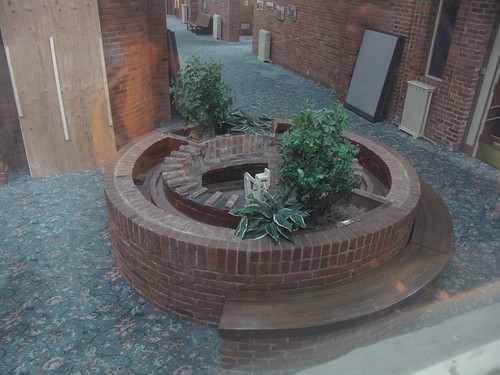
Haunted Well

In Conclusion

Okay, so that was pretty entertaining, a nice way to spend an hour and a half in a city you’re not too familiar with. And aside from the supernatural stuff it was quite educational—gotta say, Victoria packed a lot of history in a mere century and a half. But for me, all the pseudo-scientific babble actually worked against suspending my disbelief, because I could spot the faulty logic. If it had been a straightforward “here’s what people are saying, here’s what they believe” tour, or a bunch of way over-the-top tales of tragic deaths and vengeful spirits, it would have been easier to swallow. Oh, well. So when I get another chance, I doubt I’ll go on another tour to try different routes.
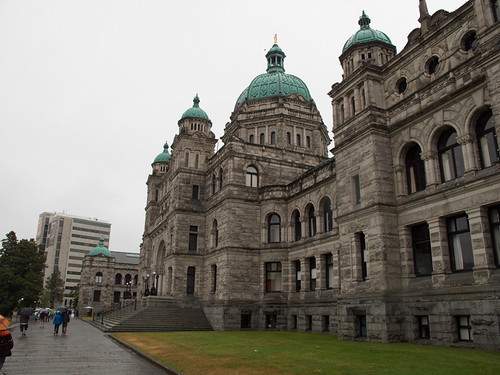
Skeptics in Victoria

It was totally a last-minute thing. Some of the the Skeptics in the Pub crowd had been talking about a weekend trip to Victoria, but that had been scheduled for mid-July, then rescheduled to… later. Then, at New Bright Lights on Friday I heard that it had indeed been rescheduled, for that weekend. Well, fortunately my plans for the weekend had fallen through, so it was an easy decision. Rides, a place to stay, a clean pair of underwear in my bag, and I was good to go.

It was totally a last-minute thing. Some of the the Skeptics in the Pub crowd had been talking about a weekend trip to Victoria, but that had been scheduled for mid-July, then rescheduled to… later. Then, at New Bright Lights on Friday I heard that it had indeed been rescheduled, for that weekend. Well, fortunately my plans for the weekend had fallen through, so it was an easy decision. Rides, a place to stay, a clean pair of underwear in my bag, and I was good to go.

I figured I had to be back in Vancouver by noon because I was taking care of grass dropin volleyball and I couldn’t find someone else on such short notice. Then again, it would probably be raining, which let me off the hook. Then again again, what if it didn’t? Then again again again, you only live once.

So I was up early on a grey Saturday morning, off to take the ferry to Victoria. A few other skeptics were on board, so we hung out and—well, honestly, half the time we were all playing with our respective iPhones / iPads. But in a hanging-out sort of way.

Plans for the day were left deliberately vague. We had talked about going up to the Observatory, but that wasn’t happening in this weather. So, first order of business: lunch. Then, the Royal BC Museum. I’d only been there twice, and not for a long time. When was the Leonardo da Vinci exhibit? I think I was even still in school back then. So yes, a long time.

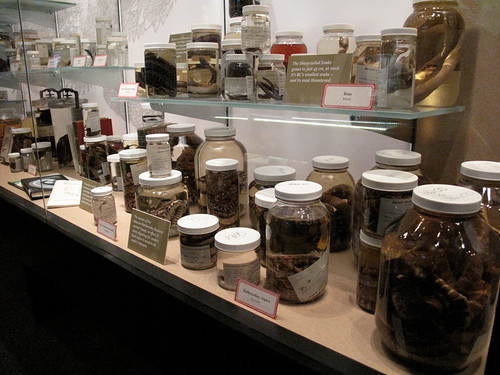
I went through all the exhibits: Natural History, First Nations, Century Hall, and took hundreds of pictures of the fossils, the skeletons, the bugs on pins, the sculptures, everything. I drank everything in, recording (or attempting to record) every single detail of my visit. Of course, most of my pictures didn’t turn out so great, and some just weren’t that interesting the day after. Why on earth did I take pictures of rows of dragonfly specimens—pretty though they were—and the signs identifying their species and sex? I mean, points for completeness, but I think I crossed a line somewhere.

Though if I did, I think the museum crossed it too. Now that I think about it, that exhibit is called “Behind the Scenes”, and all those shelves full of specimens and fossils and snakes in jars are supposed to give us a glimpse of science as it is actually practiced. Good job!

After a couple hours of this, a few of us went to see the IMAX movie on the Hubble space telescope. Frankly I was a bit scared of motion sickness—I’d had bad experiences in IMAX theatre—but everything was fine. And the movie itself? Awesome beyond words. I don’t know what impresses me more: the guts of the people who strap themselves to a giant controlled fireball to lift themselves out into the blackness of space, the ingenuity of the people who designed said fireball, the Hubble, and all the instruments to maintain it, or the breathtaking beauty of the universe as revealed through the telescope.

Some of the Hubble images, like the Pillars of Creation, are pretty common nowadays. Others, like Saturn’s Aurora Australis, a little less common. But what this movie showed us was beyond anything I’d ever seen, beyond the wildest sci-fi because it’s not just beautiful and awesome, it’s also true. That faraway stellar nursery (whose name I forget, could have been the Orion Nebula) whose newborn stars have carved out a deep canyon in the surrounding gas with their fierce solar winds; the faraway galaxies, pretty spirals or weird distorted shapes; a fantastic assortment of light and colour, all in 3D.

And then the gift shop had to spoil it for us by selling healing crystals to realign your chakras and increase your spiritual energy or whatever else. I notice they don’t have any stone to cure your gullibility.

After that we went out to hang with Daniel Loxton (author of the excellent children’s book Evolution and editor of Junior Skeptic magazine) in his cluttered and awesome studio, where Transformers posters competed with dinosaur models and old UFOlogy books. After dinner I and a friend decided to go on a ghost walking tour of downtown Victoria—hey, I’d never been on one, and they promised “narrow streets and back alleys” and a bunch of ghosts. Sounds like fun even if you don’t believe in ghosts.

UPDATE: And here it is

BC Legislature

Herpetology section

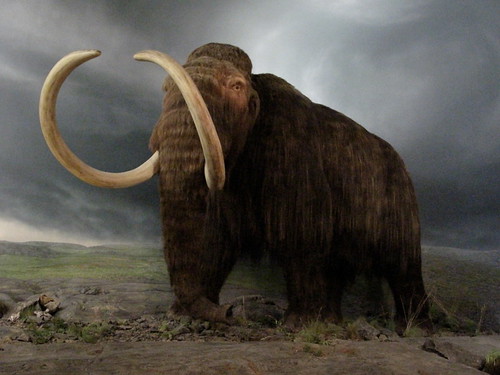
Mammoth

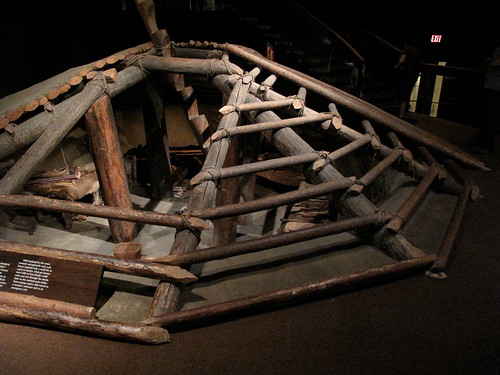
Pit House

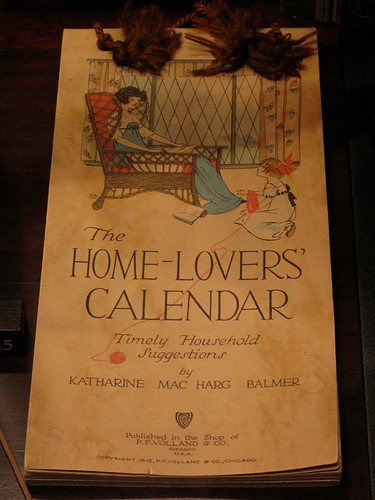
The Home-Lovers' Calendar

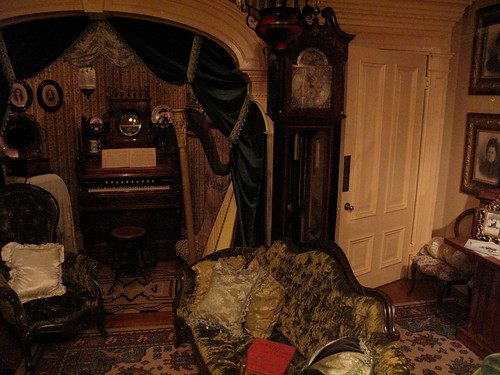
Luxury Suite

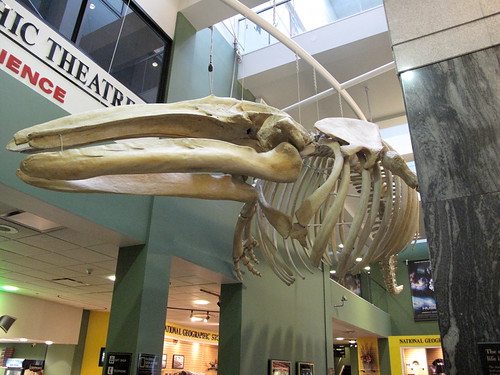
Whale skeleton

whu-SEI-kum: Place of Mud

Looking East